News Briefing · Illegal Mining
Galamsey crisis update: April 2026
Illegal mining continues to devastate Ghana’s land, rivers, and communities. Here is what is happening right now — drawn from the latest reporting across Ghana’s leading news outlets.
Published April 26, 2026 · Sources: GBC Ghana · Ghanaian Times · News Ghana · Citi Newsroom · Rainbow Radio · The Daily Searchlight
| Water bodies polluted 60% |
Forest reserves impacted 50+ |
| Hectares degraded 9,000+ |
NAIMOS 2026 budget GH₵150M |
Latest developments
April 24, 2026
Bono Region residents march in red and black against galamsey
Residents, traditional leaders, and youth groups in the Amomaso and Benkasa communities took to the streets of Berekum, demanding an immediate end to illegal mining operations destroying their farmlands and water supplies. Carrying placards reading “Galamsey breeds incurable diseases” and “Berekum is not ready to import drinking water,” protesters submitted a formal petition to the Minerals Commission and Parliament. The MP for Berekum East pledged to escalate their concerns — but the Minerals Commission has yet to respond publicly.
April 26, 2026
Mining leases revoked after Chinese-linked galamsey uncovered on concessions
The Minister for Lands and Natural Resources revoked the mining leases of Adamus Resources Limited across three concessions — Akango, Salman, and Nkroful — following a Minerals Commission investigation. Findings showed the company sub-contracted operations without ministerial approval, allowed Chinese nationals to conduct galamsey on its concessions, and operated without required EPA environmental approvals. Criminal prosecution of the company’s directors under the Minerals and Mining (Amendment) Act remains possible.
April 22, 2026
Coalition petitions NPA to cut off fuel supply to illegal mines
The Ghana Coalition Against Galamsey has formally petitioned the National Petroleum Authority to regulate and restrict fuel sales to illegal mining operations — targeting the logistical backbone of galamsey rather than the mining sites themselves. The coalition is calling for data-driven audits of petroleum distribution networks and prosecution of fuel suppliers knowingly serving unlicensed miners.
March 28, 2026
“The fight is failing” — GCAG calls on President Mahama to personally intervene
The Ghana Coalition Against Galamsey declared that anti-mining efforts have produced little meaningful progress. Affected forest reserves grew from nearly 45 to at least 50 since President Mahama took office, with over 9,000 hectares now degraded. The Atewa Forest Reserve — a critical drinking water source for more than five million Ghanaians — faces imminent encroachment. Not a single District Chief Executive has been sanctioned despite presidential pledges. The coalition demanded the release of a stalled Attorney General investigation.
April 4, 2026
Exposé reveals district assemblies collecting illegal levies from galamsey operators
A Joy FM investigation uncovered that some Metropolitan, Municipal, and District Assemblies had been generating revenue by taxing illegal miners within their jurisdictions — in effect legitimising and profiting from galamsey. President Mahama ordered an immediate halt and expanded the investigation nationwide. A government official described the practice as “environmental terrorism.” Authorities confirmed the destruction of over 500 “sampan” mining vessels from Ghana’s waterways.
April 23, 2026
Drones and digital tracking to monitor mining hotspots nationwide
Ghana’s Ministry of Lands and Natural Resources and the Minerals Commission are deploying advanced drone systems and a national digital tracking network for mining equipment, shifting from reactive enforcement to continuous real-time oversight. A permitting system to track over 1,000 excavators was announced in January 2026. The drone programme — developed with the University of Mines and Technology — covers gold mining sites, forest reserves, and water bodies. The 2026 budget allocates GH₵150 million to NAIMOS for operations, cleanup, and land restoration.
Rivers on the brink: the human cost of poisoned waterways
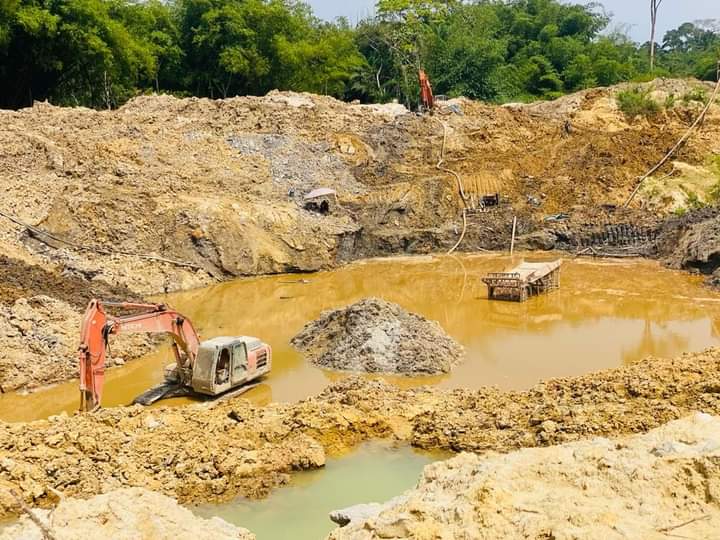
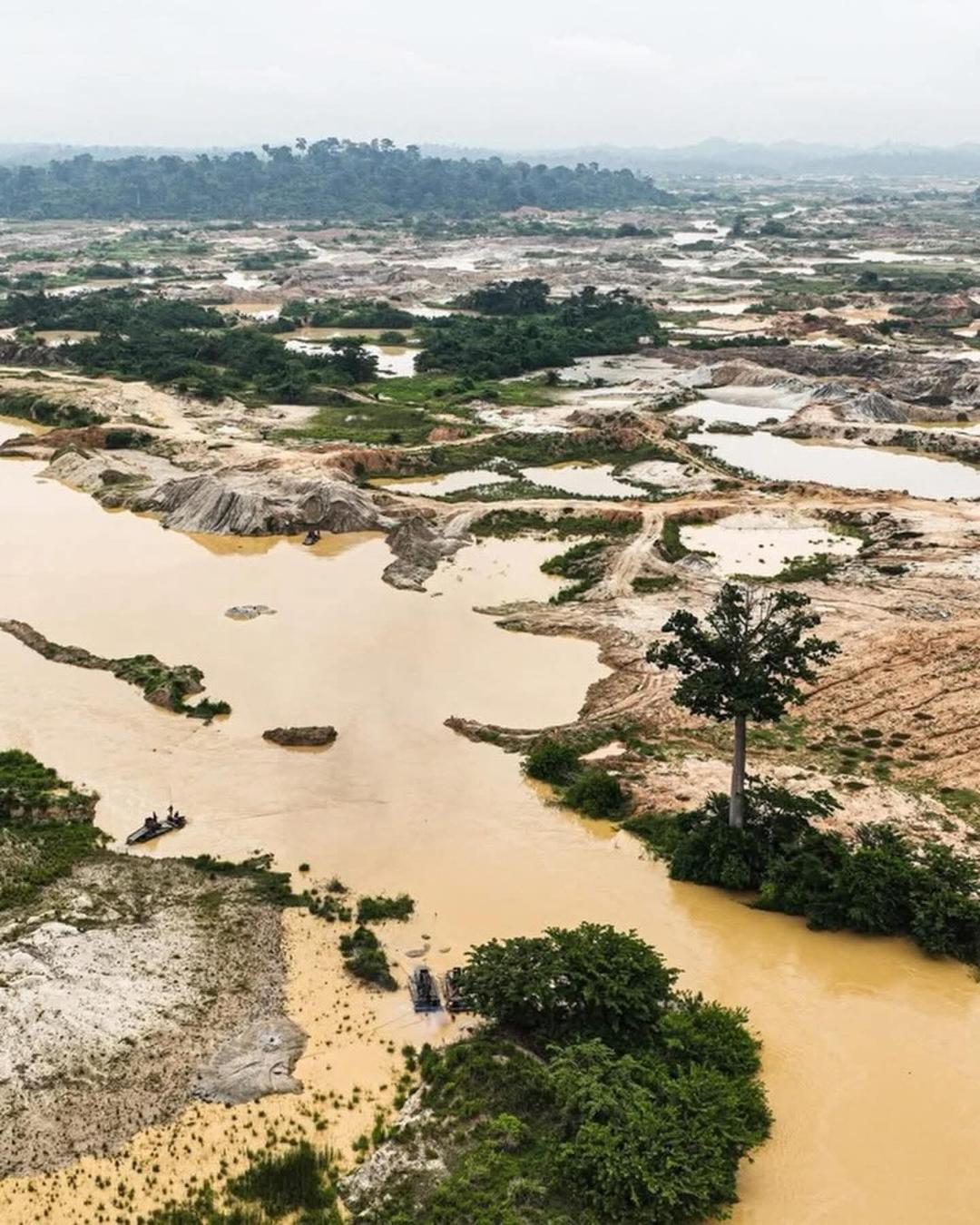
Ghana’s major river basins — the Pra, Birim, Ankobra, Tano, and Offin — are now so heavily contaminated by mercury, lead, cyanide, and silt that turbidity levels at some intake points are tens of thousands of times above what treatment plants were built to handle. Ghana Water Company Limited facilities in four regions have been forced to reduce output or shut down entirely. Toxic heavy metals entering the food chain are linked to cancers, neurological damage, developmental disorders, and adverse birth outcomes in affected communities.

GHEAG position
Galamsey is not merely an environmental emergency — it is a governance crisis. Enforcement that rises and falls with political pressure, institutions that have collected levies from illegal miners, and the persistence of foreign-led operations on licensed concessions all point to systemic failures. GHEAG calls for consistent, non-partisan enforcement; the immediate release of the Attorney General’s investigation findings; full protection of all remaining forest reserves including Atewa; and meaningful support for communities bearing the health and economic burden of this destruction.
Published by GHEAG Media · gheag.org · April 26, 2026
Sources: GBC Ghana, Ghanaian Times, News Ghana, Citi Newsroom, Rainbow Radio, The Daily Searchlight
📷 Header photograph: Watereso · © Edem Srem, April 2026. Used with permission.
Galamsey
Water pollution
Deforestation
Public health
Mining policy